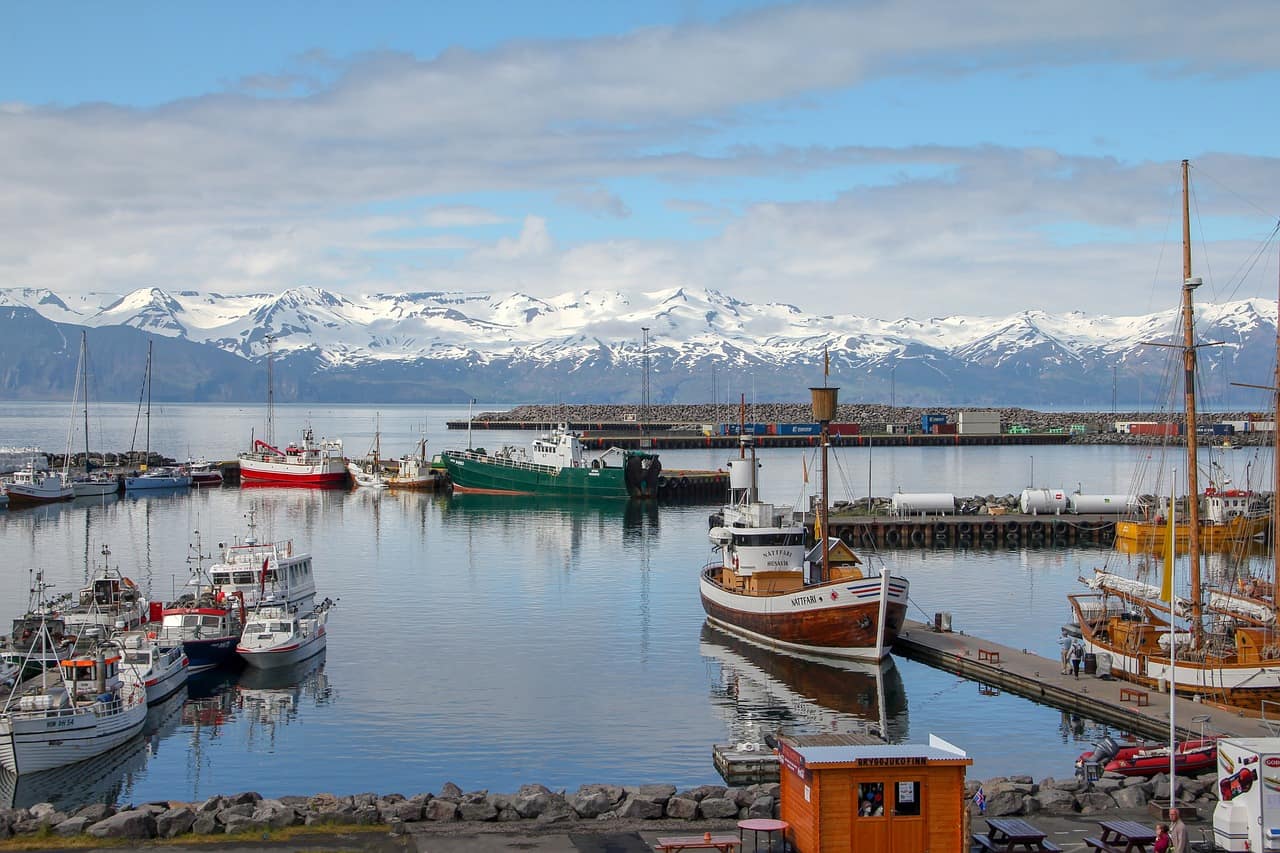

Húsavík calls itself the whale watching capital of Iceland, and unusually for a tourism slogan, the data agrees: Skjálfandi Bay’s summer sailings find whales on the overwhelming majority of trips, humpbacks headline most of them, and blue whales, the largest animals ever to exist, make appearances most seasons. The town behind the harbor (population around 2,300) has built one of Iceland’s most charming visitor economies on the back of it without losing its working soul.
The Whales, Obviously
The bay’s buffet of summer feeding grounds draws humpbacks, minkes, white beaked dolphins, and harbour porpoises from April to October, with the deep water giants (blues, fins) most likely in early and mid summer. The fleet offers a genuine choice: beautifully restored oak fishing boats for the classic experience, silent electric schooners under sail for the most atmospheric one, and RIB speedboats for proximity. Mornings statistically offer calmer seas. Whatever the vessel, the moment a humpback’s tail rises against Kinnarfjöll’s snow streaked wall justifies the entire northern detour.
The Whale Museum beside the harbor completes the education: full skeletons (the blue whale’s defies belief), the biology, and the honest history of how a whaling nation became a whale watching one.
After the Boat
GeoSea. The town’s geothermal cliff baths changed the Icelandic bathing leaderboard: seawater hot pools cantilevered over the bay’s edge, with whale spouts occasionally visible from the water and the midnight sun performing directly ahead. The post sailing soak here is mandatory, not optional.
Húsavíkurkirkja. The 1907 wooden church, Norwegian timber gone gracefully cross shaped, is the town’s postcard and one of Iceland’s loveliest buildings, usually open in summer.
The Eurovision Pilgrimage. The 2020 film Eurovision Song Contest: The Story of Fire Saga set its heroes here, and the town leaned in with self aware delight: the small exhibition, the Ja Ja Ding Dong bar moment, and the genuine Oscar nomination (“Húsavík,” the song) the town celebrates more sincerely than the film expected.
The Exploration Museum tells the unexpected local chapter of the Apollo program: the astronauts trained for the moon in the lava fields nearby, and the geology lessons they took here flew to the Sea of Tranquility.
Harbor Life. Naustið and the harbor restaurants serve the fish soup tradition; the Húsavík slow life (one main street, infinite bay views) does the rest.
The Doorstep
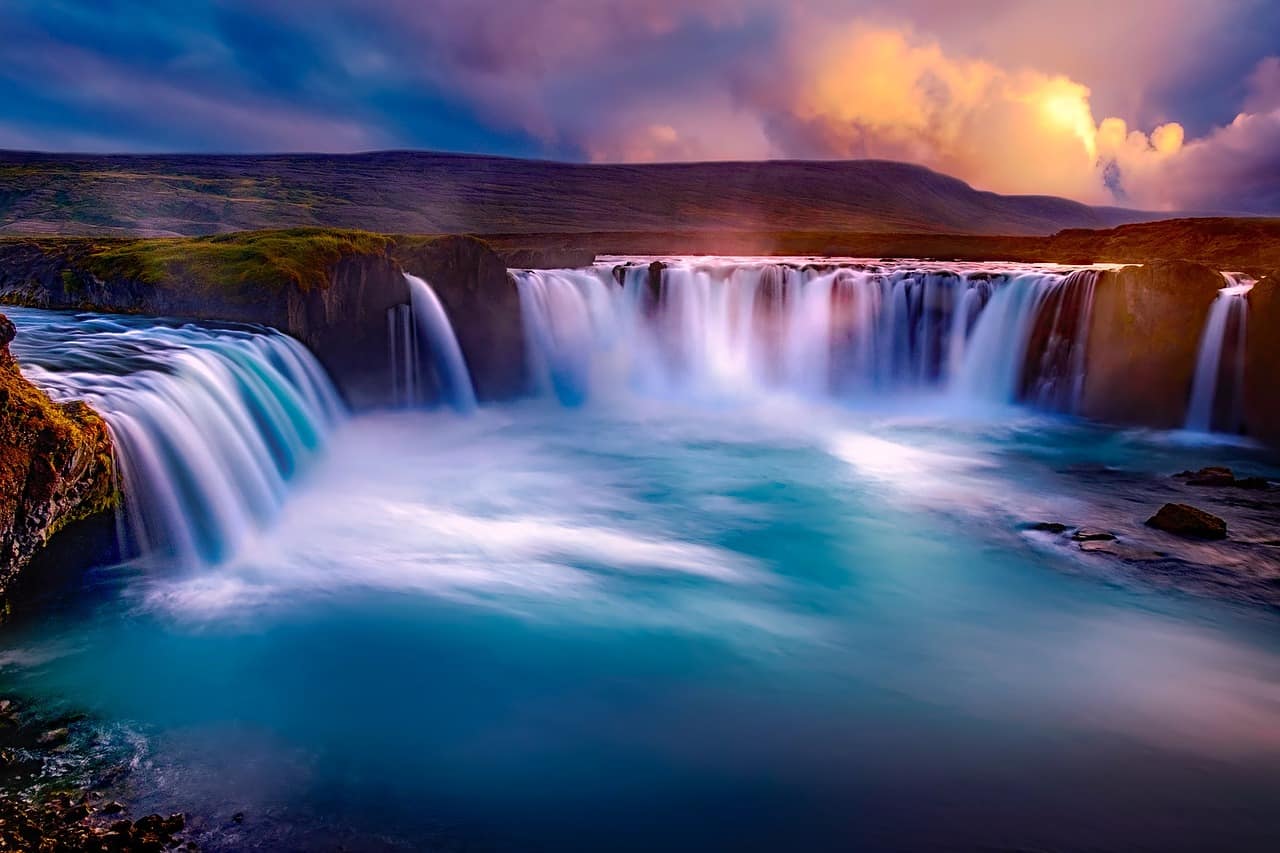
Húsavík anchors the Diamond Circle: Goðafoss 35 minutes south, Lake Mývatn’s volcanic wonderland 45 minutes, Dettifoss and Ásbyrgi canyon under an hour east, and the puffin cliffs of the Tjörnes peninsula 15 minutes up the coast. Our North Iceland guide maps the full loop; Húsavík is its natural overnight.
Frequently Asked Questions
When is the best whale watching in Husavik?
June to August for peak activity and the biggest species variety; the season runs roughly April to October.
Is Husavik better than Reykjavik for whales?
For success rates and the humpback show, yes, decisively. Reykjavík wins only on convenience.
What else is Husavik known for?
GeoSea’s cliff baths, the wooden church, the Whale Museum, and its cheerful Eurovision movie fame.