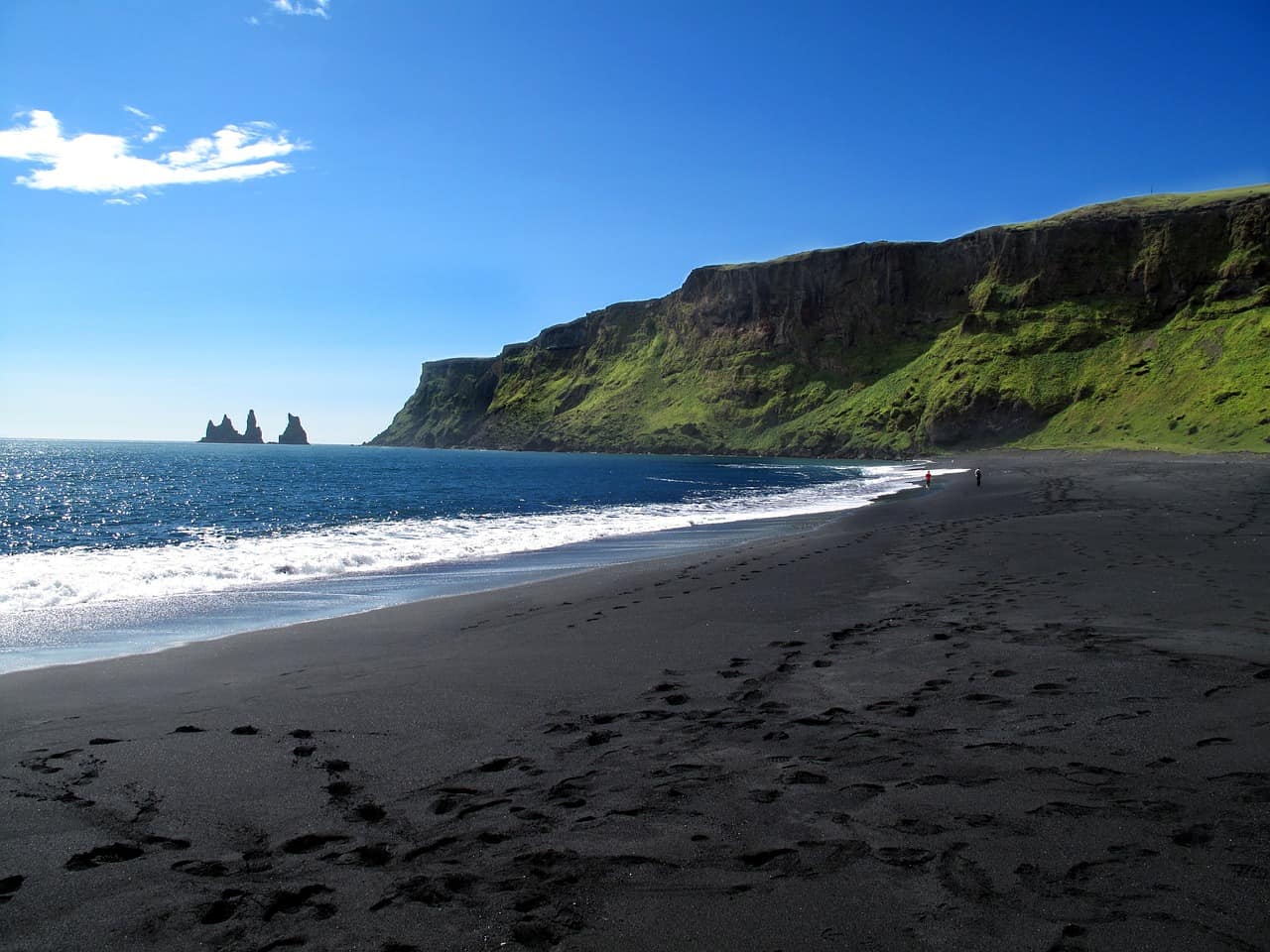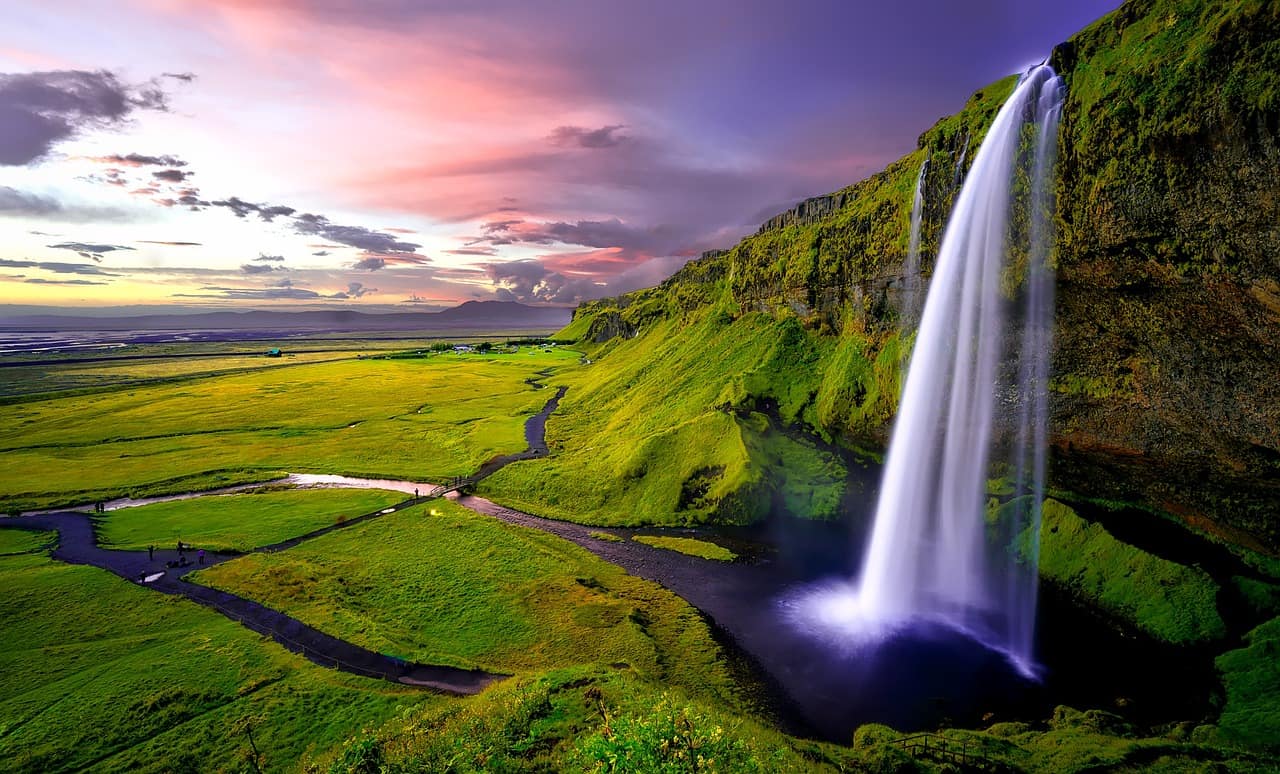
The South Coast Tours are amongst the most popular in Iceland due to large number of extraordinary places you can visit in one day. Although most beaches in Iceland have black sand, the most famous one is simply called The Black Sand Beach by tourists. The name of it is Reynisfjara, and is situated just outside the town Vik. Along the way to Vik you will be spoiled by a multitude of stunning waterfalls such as Seljalandsfoss, Gljufrabui, Skogafoss and several others.
Live availability
Book tours with live availability
The Beauty of The South Coast
Whether you decide to make the full ring road tour of Iceland or just venture out of your Reykjavik base, the South Coast of Iceland is a must see for any visitors.
Things to Do in South Iceland: The Complete Guide to the Famous Coast
South Iceland is where the country keeps its greatest hits. One road, Route 1 between Hveragerði and Höfn, strings together more world class sights per kilometer than anywhere else in the country: waterfalls you walk behind, beaches of black glass, glacier tongues reaching almost to the road, and a lagoon full of drifting icebergs at the far end. If a first trip to Iceland has a spine, this is it.
West to East: The Essential Stops
Seljalandsfoss and Gljúfrabúi. The waterfall with the path behind the curtain, and its hidden sibling tucked inside a mossy canyon 1,969 feet (600 meters) north, which most visitors walk straight past. Rain shell mandatory, regrets impossible.
Skógafoss. Sixty meters of straight drop, a permanent rainbow on sunny days, and 527 steps to the top platform where the Fimmvörðuháls trail sets off between two glaciers. Stand close; the spray is the experience.
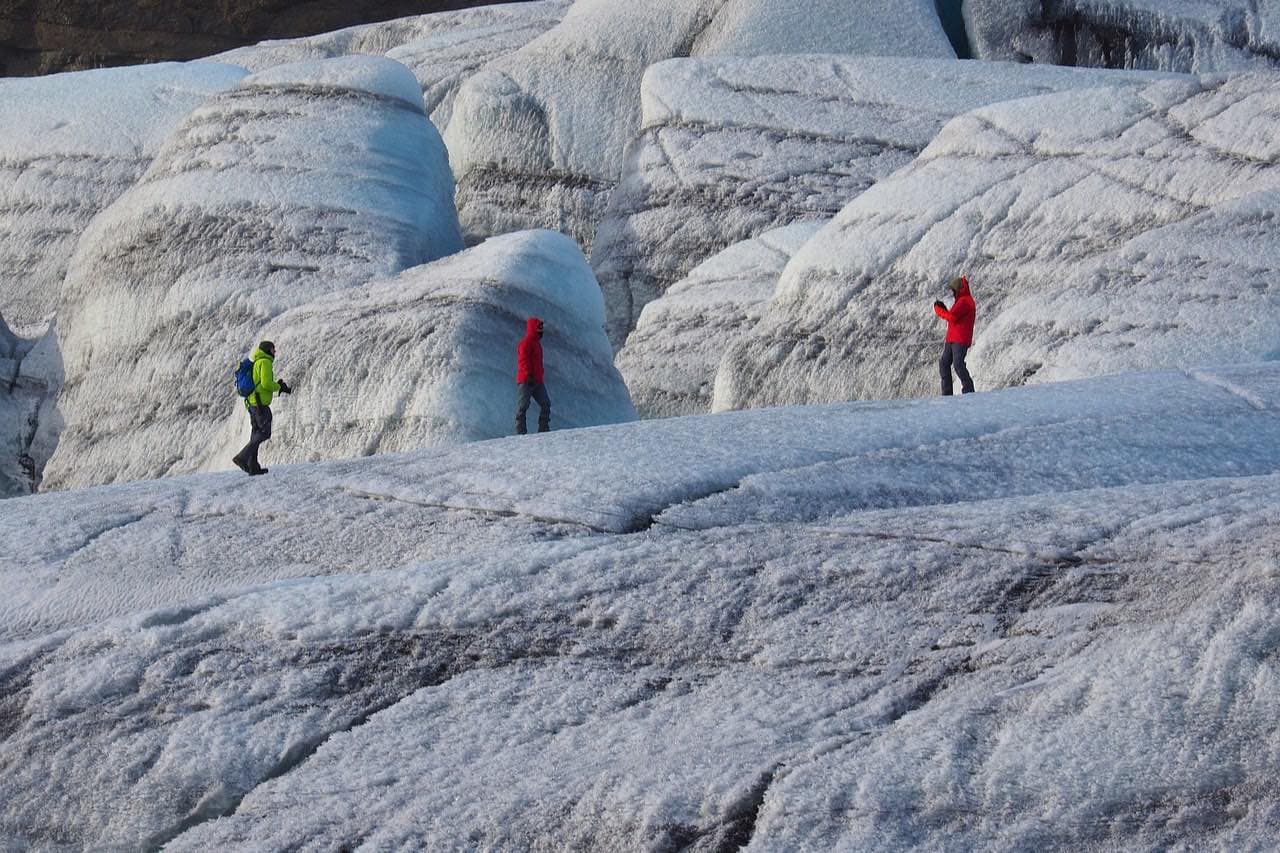
Sólheimajökull. The most accessible glacier tongue in Iceland, with guided crampon hikes year round and the most visible climate lesson in the country marked in its retreating ice.
Dyrhólaey. The great rock arch and lighthouse promontory, with puffins from May to August and a black coastline running to the horizon in both directions.
Reynisfjara and Vík. The famous black sand beach with its basalt organ pipes and offshore sea stacks. Respect the sneaker wave warning system absolutely; this shore is as dangerous as it is beautiful. The village of Vík makes the natural overnight; our dedicated Vík guide covers it street by street.
Fjaðrárgljúfur. A serpentine moss canyon 328 feet (100 meters) deep with a rim path and platforms, forty minutes east of Vík.
Skaftafell (Vatnajökull National Park). The hiking hub of the southeast: the easy trail to Svartifoss, the waterfall framed by hanging basalt columns, glacier walks on Falljökull and Svínafellsjökull, and longer routes with views over Iceland’s largest ice cap.
Jökulsárlón and Diamond Beach. The grand finale: icebergs calving from Breiðamerkurjökull, drifting through the lagoon among seals, then washing ashore as polished crystal on black sand. Boat tours run in season; the shore is free and endlessly mesmerizing. In winter, the crystal ice cave tours depart from here.
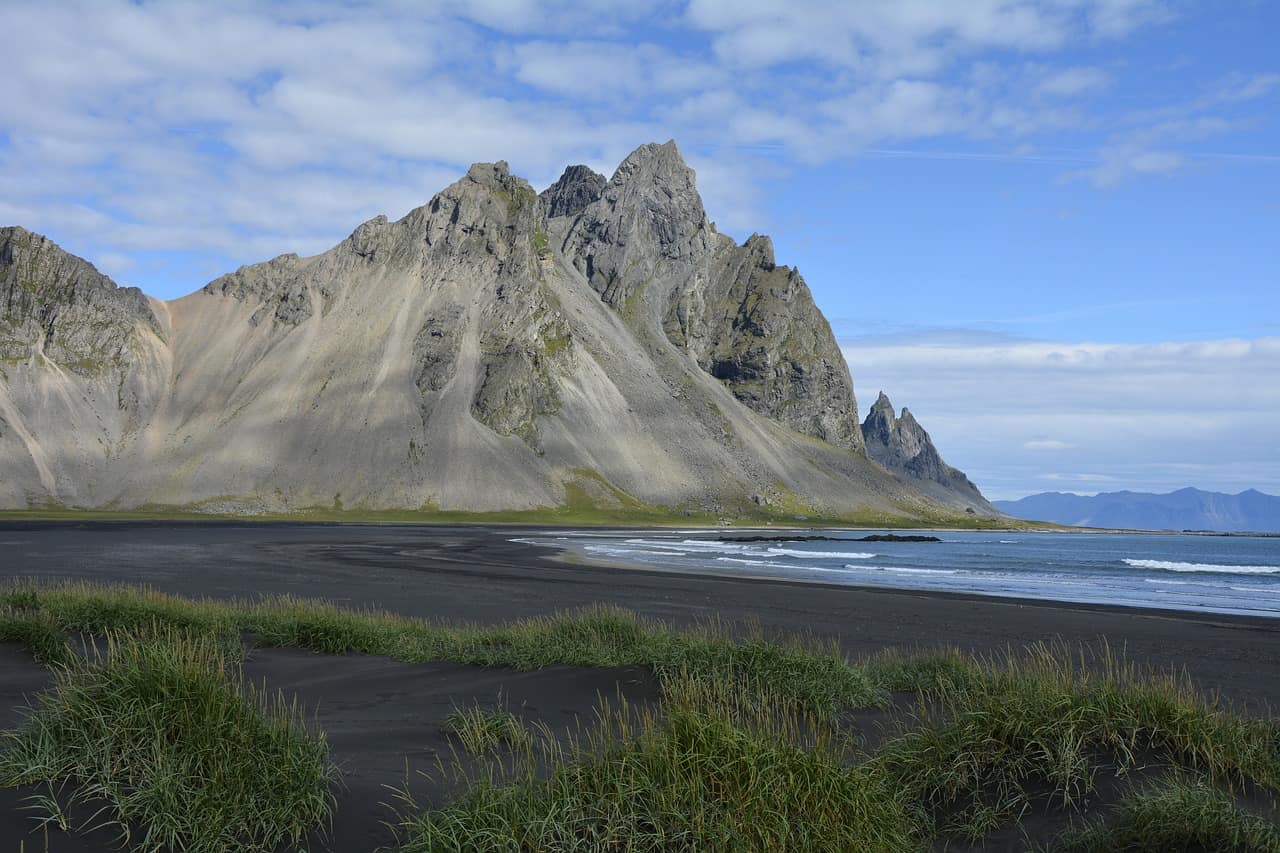
Stokksnes and Vestrahorn. Past Höfn, the batman mountain rising behind a black dune beach, the southeast’s signature photograph (small private access fee).
Beyond Route 1
The south hides depth behind its headline corridor: the Westman Islands ferry from Landeyjahöfn (the world’s largest puffin colony and a volcano museum built over a buried house), Landmannalaugar and Þórsmörk in the highlands above (summer access by highland bus or super jeep), the Lava Centre at Hvolsvöllur for the geology behind everything you are seeing, the Katla ice caves running most of the year from Vík, and the hot river hike at Reykjadalur at the region’s western gate. Seljavallalaug, the 1923 pool built into a mountainside, rewards those who walk the 20 minutes and accept rustic changing facilities.
Route Logic
From Reykjavík: Vík is 2.5 hours, Jökulsárlón is 5. The classic mistake is day tripping the whole coast; the classic fix is overnighting. One night in Vík covers the western half properly; two nights (Vík plus the Skaftafell or Höfn area) unlock the full coast including the lagoon at sunrise, when it belongs to photographers and seals. Winter visitors should double drive time estimates and check road.is religiously; summer visitors should sightsee before 9 am or after 6 pm to dodge the bus wave.
Frequently Asked Questions
How many days do you need for South Iceland?
Two to three days for the full coast to Höfn. One long day reaches Vík and back, which covers half the highlights.
Is South Iceland doable in winter?
Yes, and beautifully: frozen waterfalls, ice caves, and aurora. It demands 4WD, short daily distances, and weather flexibility.
What is the best base in South Iceland?
Vík for the western half, the Skaftafell to Höfn stretch for the lagoon end. Splitting nights between both is the optimal play.
Explore Iceland by region
Hover or tap a location to explore
Keep reading