
Höfn (pronounce it like an abrupt “hup” mid hiccup and locals will smile at the attempt) is the harbor town where Vatnajökull’s glacier tongues meet the Atlantic and where Iceland’s langoustine fleet lands its catch. For travelers, it is two things at once: the gastronomic reward at the south coast’s far end, and the base for a stretch of glacier and ice cave country that the day trippers from Reykjavík physically cannot reach.
The Langoustine Pilgrimage
Höfn is Iceland’s humarbær, the langoustine town, and treats the small lobster as identity: grilled tails with garlic butter, langoustine soup, langoustine pizza if you insist. Pakkhús, in the old harbor warehouse, is the storied address; Hafnarbúðin, the harbor kiosk, serves the democratic langoustine baguette. The Humarhátíð lobster festival each summer turns devotion into a street party. Eating langoustine within sight of the boats that caught it is the southeast’s essential act.
Vestrahorn and Stokksnes
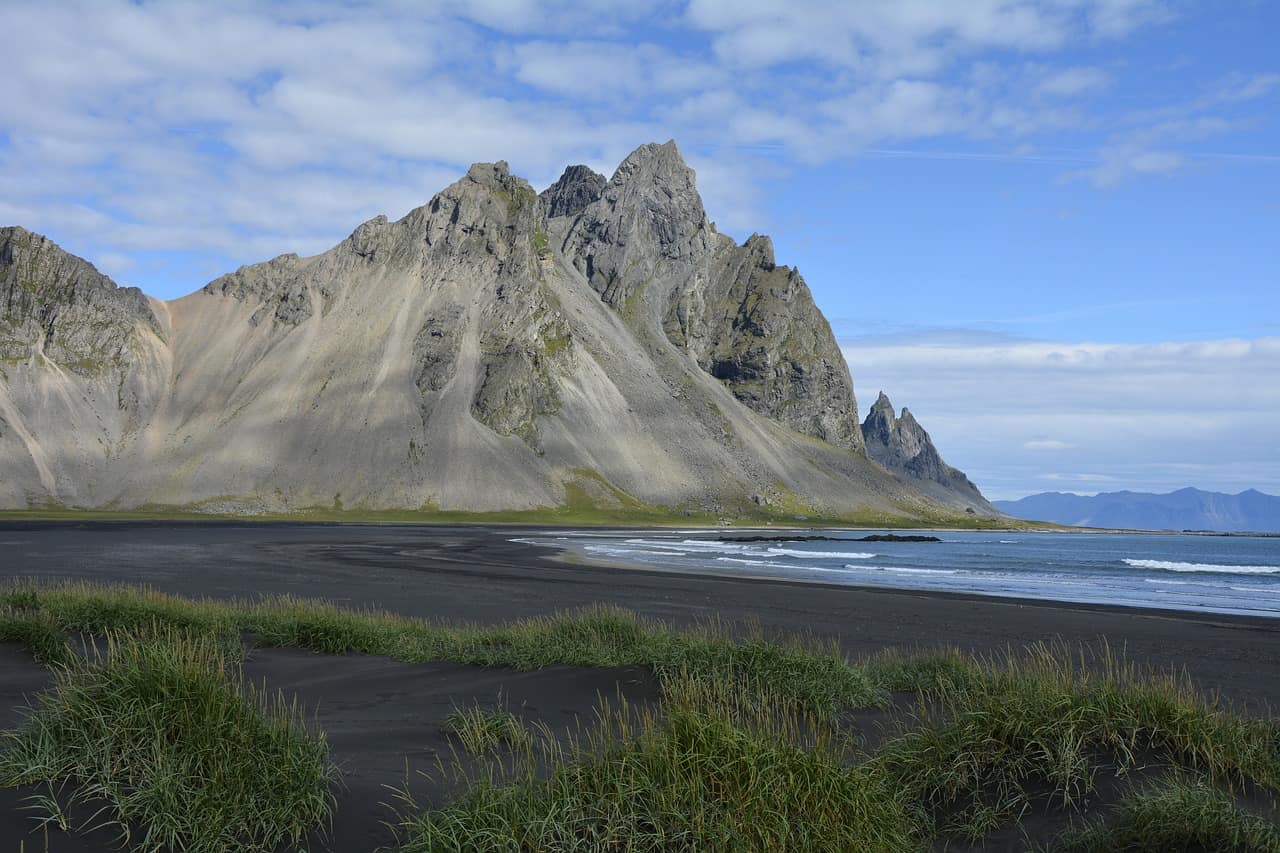
Fifteen minutes east, the Stokksnes peninsula stages Iceland’s most cinematic mountain: Vestrahorn’s 1,490 feet (454 meter) scree pyramids rising straight from a black sand beach, doubling themselves in tidal lagoon reflections. The private access road (modest fee at the Viking Café) leads to the dunes, the long beach, and a weathered Viking film set village that never saw a camera roll but photographs as if it had. Sunrise here, with seals in the surf and the batman peaks burning orange, is the southeast’s defining image. The northern lights over Vestrahorn need no further marketing.
The Glacier Coast Nobody Day Trips
Höfn’s radius westward holds the quiet siblings of famous Jökulsárlón (45 minutes away and covered in our South Iceland guide):
Hoffellsjökull (20 minutes): a glacier tongue and lagoon reached by gravel road, with the Hoffell hot tubs, five geothermal pots in a gravel field facing the ice, as the area’s best kept open secret.
Heinabergslón and Fláajökull (30 minutes): iceberg lagoons where kayaking tours paddle in near privacy, the experience Jökulsárlón offered twenty years ago.
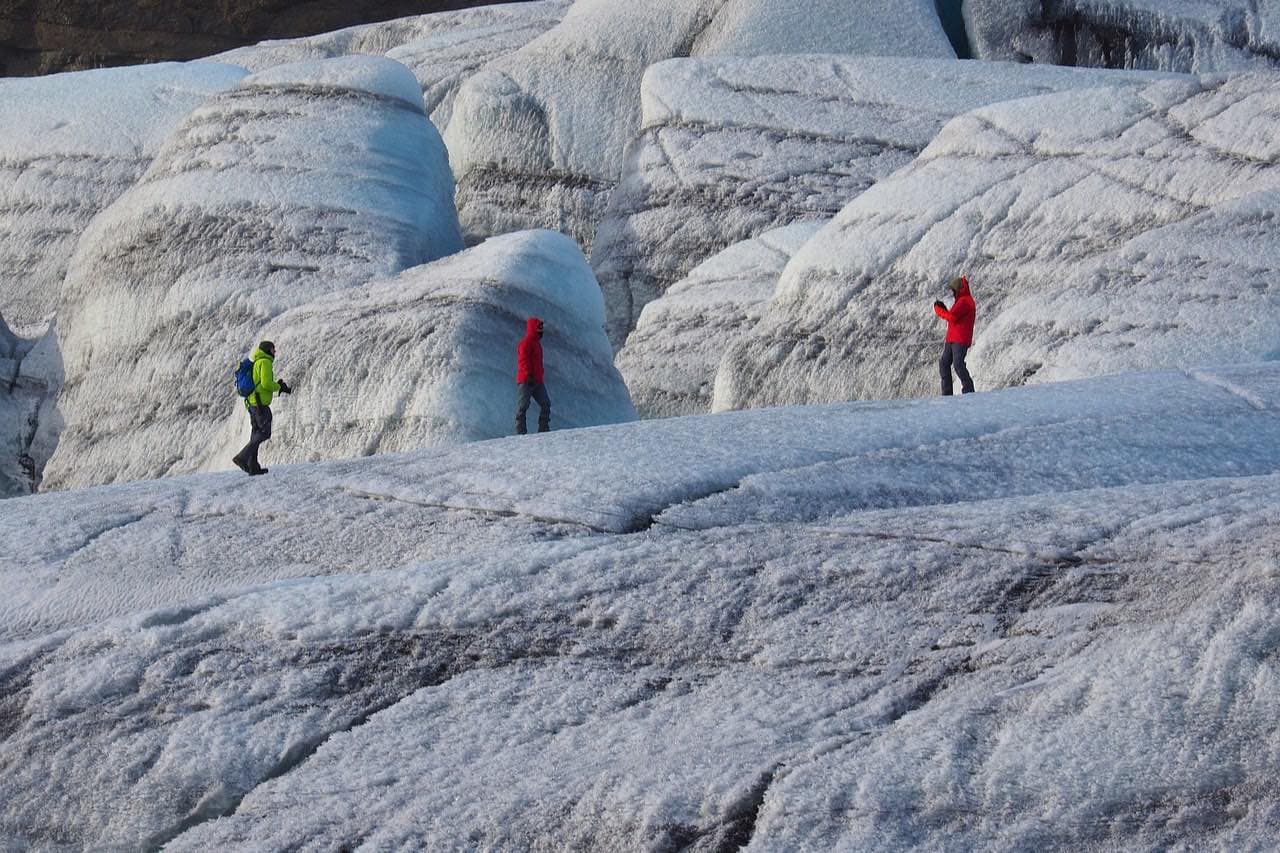
Skálafellsjökull: glacier hikes and super jeep tours on the ice cap’s southeastern reaches, plus winter ice cave departures that skip the main lagoon crowds entirely.
In and Around Town
The harbor walk loops past the fleet to Ósland’s shorebird headland; the Gamlabúð visitor center (an 1864 warehouse) handles Vatnajökull National Park exhibitions; the town pool delivers the standard national happiness; and the view from almost any street ends in glacier. Eastward, the Ring Road toward the Eastfjords threads beneath Eystrahorn, Vestrahorn’s jagged twin, through some of the emptiest coastal road in the country: Höfn is the hinge between the famous south and the secret east.
The Practical Base
Höfn (population around 1,700) carries full services: supermarkets, fuel, a domestic airfield, and the southeast’s widest accommodation. Two nights here transform a southern itinerary: one for the langoustine and Stokksnes evening, one for the quiet glaciers, with Jökulsárlón taken at sunrise when it belongs to photographers and seals.
Frequently Asked Questions
Is Hofn worth visiting?
As the south coast’s turnaround point: emphatically. The langoustine, Vestrahorn, and crowd free glacier lagoons justify the distance.
How far is Hofn from Jokulsarlon?
About 45 minutes west, which makes sunrise and evening lagoon visits practical in a way Reykjavík day tours can never match.
What is Hofn famous for?
Langoustine, the Vestrahorn mountain at Stokksnes, and its post beneath Europe’s largest ice cap.