Ice covers about 11 percent of Iceland, and almost all of the country's best days out happen on it or under it. A glacier hike puts crampons on your feet and a rope team around you on a moving river of ice. An ice cave tour takes you inside that same ice, into chambers that the meltwater carved and the winter froze shut. They are different experiences with different seasons, and booking the wrong one for your dates is the single most common mistake visitors make.
Live availability
Book tours with live availability
This guide covers the four glaciers worth your time, the difference between a natural blue ice cave and a tunnel you can visit in July, and how to match a tour to the week you are actually here.
Glacier Hikes: Walking on the Ice
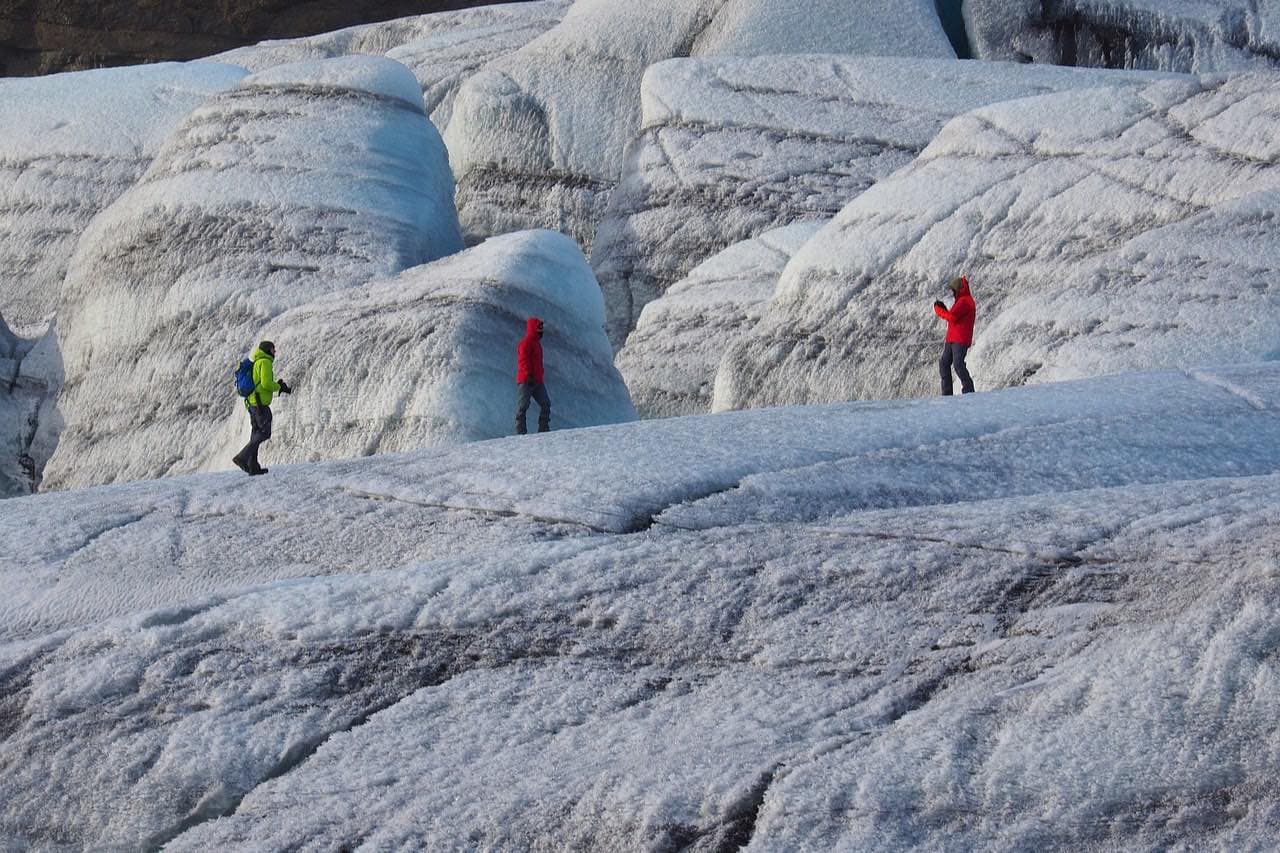
Every reputable glacier hike is guided, and that is not an upsell. Outlet glaciers are laced with crevasses and moulins that open, close and move; the snow bridge that held last week may not hold today. Guides carry rope, screws and a route in their heads that changes weekly. Walking out on your own is how people die here, and the operators on this page will not let you.
Solheimajokull
The workhorse. This outlet tongue of Myrdalsjokull sits about 2.5 hours from Reykjavik on the south coast, and the walk from the car park to the ice takes fifteen minutes. Most beginner hikes here run 3 to 4 hours door to ice and back, need no previous experience, and take ages 8 and up. The ice is dramatic and filthy in the best way: ash bands from Katla's eruptions run through it like tree rings.
Skaftafell and Vatnajokull
Vatnajokull is Europe's largest glacier by volume, roughly 3,100 square miles (about 8,000 square kilometers) of ice up to 3,000 feet (900 meters) thick. Its outlet tongues at Skaftafell, Falljokull and Svinafellsjokull give the most spectacular hiking in the country and the widest range of grades, from a gentle 3 hour introduction to a full day with ice climbing on a vertical wall. Skaftafell is about 4.5 hours from Reykjavik, which is why most people pair it with South East Iceland and stay a night near Hofn or Kirkjubaejarklaustur.
Langjokull
Iceland's second largest ice cap, and the closest to Reykjavik at about 2 hours. Langjokull is snowmobile and ice tunnel country rather than classic hiking: the surface is broad, white and fast. Tours here combine neatly with the Silver Circle and West Iceland, or bolt onto a Golden Circle day as an afternoon upgrade.
Myrdalsjokull and Katla
The ice cap above Vik, and the roof of the Katla volcano. Super jeep and snowmobile tours run up here from Vik year round, and this is where Iceland's only reliably summer accessible ice cave sits.
Ice Caves: Inside the Glacier
There are three genuinely different products sold as "ice caves" in Iceland, and the differences matter more than the price.
Natural Blue Ice Caves, Vatnajokull
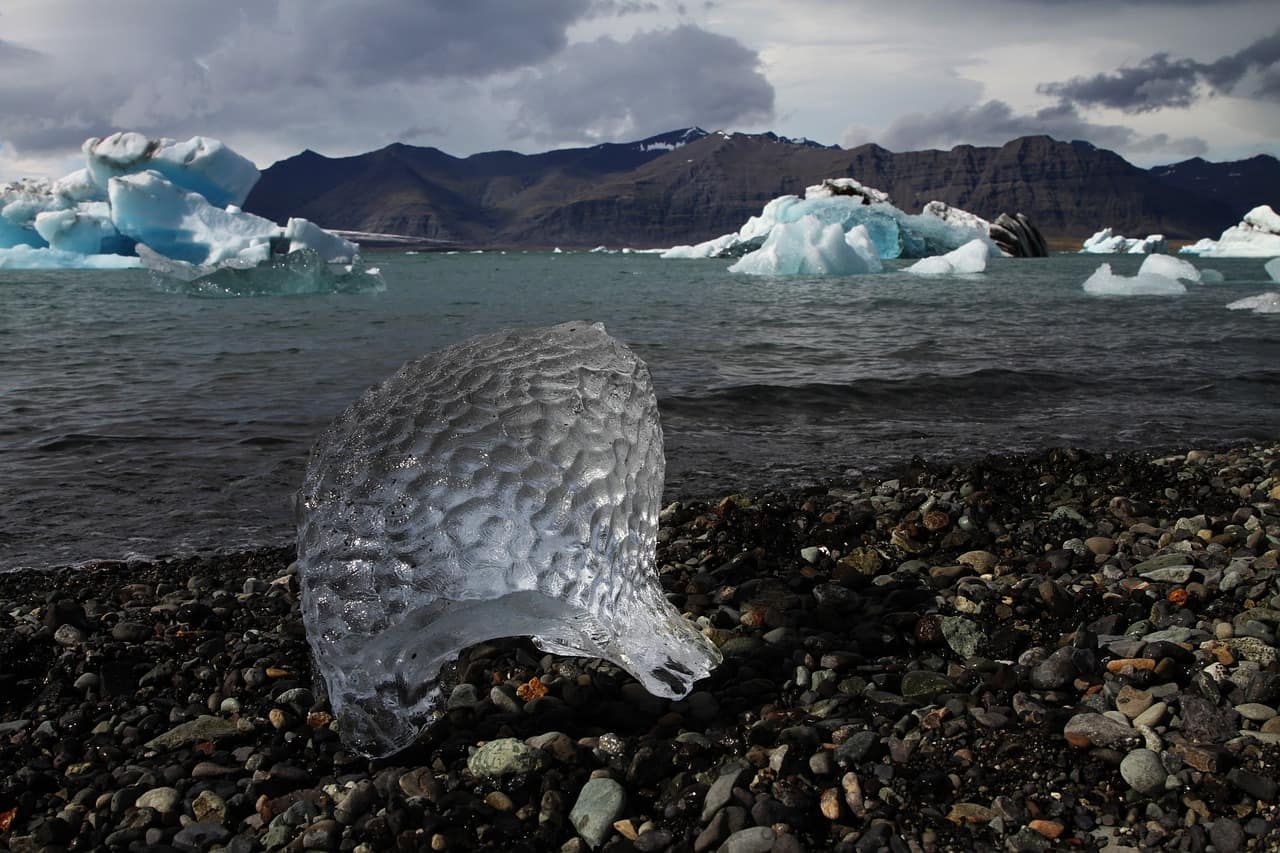
The real thing, and the reason people fly here in January. Meltwater carves these chambers through the summer; when the glacier freezes solid in autumn the water stops and the caves become safe to enter. The ice is compressed, bubble free and genuinely, absurdly blue. Access is by super jeep from Jokulsarlon, and no two winters produce the same caves, so operators scout new ones each November.
Season: roughly mid November to mid March. Nobody can promise a specific cave, and a mild week can close one overnight. Book with an operator who moves you to another cave rather than cancelling.
Katla Ice Cave, Year Round
Under Myrdalsjokull above Vik, reached by super jeep. The Katla cave is black and grey rather than blue, streaked with volcanic ash, and it is structurally sound enough to visit in every month of the year. If you are here between April and October and want to stand inside a glacier, this is the tour. It is also the answer for anyone whose dates fall outside the blue ice season.
Into the Glacier, Langjokull
A man made tunnel bored 1,600 feet (500 meters) into the Langjokull ice cap at about 4,100 feet (1,250 meters) of elevation. Purists sniff at it; it is also the only way to see the inside of an ice cap in a wheelchair, in July, with a guaranteed booking. You ride up on a converted missile carrier. Children and nervous visitors love it.
The Reykjavik Alternative
Perlan's ice cave exhibit is artificial, indoors, 30 minutes from your hotel and open every day. It is not a substitute for a glacier, but it is an honest rainy day option and a good briefing for children before the real thing.
When to Go
| Experience | Best window | Possible |
|---|---|---|
| Blue ice caves (Vatnajokull) | December to February | Mid November to mid March |
| Katla ice cave | Year round | Year round |
| Into the Glacier tunnel | Year round | Year round |
| Glacier hiking | May to September | Year round |
| Snowmobiling | Year round on Langjokull | Year round |
| Ice climbing | October to April | Year round with a guide |
The honest summary: if you want blue ice, come between November and March and read our guide to Iceland in winter before you book anything. If you are here in summer, you get better hiking weather, longer days and the Katla cave instead. Both trips are worth taking.
What It Costs and What You Need
Beginner glacier hikes start around 14,000 ISK (about $100 / EUR 95). Blue ice cave tours from Jokulsarlon run roughly 25,000 to 35,000 ISK (about $180 to $250 / EUR 170 to 235). Snowmobiling and the Langjokull tunnel sit in a similar band, and private super jeep trips run considerably higher. Ice climbing add ons cost around 10,000 ISK (about $70 / EUR 67) on top of a hike.
Crampons, helmet, harness and ice axe always come with the tour. You bring waterproof trousers and jacket, warm layers, gloves, a hat, and sturdy ankle supporting boots. Trainers are refused at the meeting point, and rental boots cost about 1,500 ISK if you turn up without. Ice caves are dark, so a head torch helps although guides carry spares.
Most tours meet at the ice rather than in Reykjavik, so check whether your booking includes pickup. If it does not, you need a car: see our notes on renting a car in Iceland and allow generous margins on winter driving times.
How to Choose in Sixty Seconds
Two days in Reykjavik in winter? Take a blue ice cave day trip to Jokulsarlon, or a Langjokull snowmobile half day if you cannot spare the hours.
A week on the ring road? Hike at Skaftafell and add a blue ice cave from Jokulsarlon, both on the same stretch of the 7 day itinerary.
Travelling in July? Sunny glacier hiking at Solheimajokull or Skaftafell, plus the Katla ice cave for the inside view.
With children or limited mobility? Into the Glacier at Langjokull, or the Katla super jeep, which does the climbing for you.
Want the whole thing from above? A helicopter tour with a glacier landing puts you on ice that no road reaches, and takes ninety minutes.
Every tour below is bookable live, with the operator's own availability and prices. Filter by date to see what actually runs on your travel days, and see the rest of our things to do in Iceland for the days in between.
Frequently Asked Questions
Can you visit an ice cave in summer in Iceland?
Yes, but only certain ones. The natural blue ice caves in Vatnajokull are a winter product, roughly mid November to mid March. The Katla ice cave under Myrdalsjokull and the man made Into the Glacier tunnel in Langjokull both run all year.
Do you need experience for a glacier hike?
No. Standard glacier walks are graded for complete beginners and the only requirement is reasonable fitness and proper boots. Guides fit your crampons and teach you to walk in them at the edge of the ice.
Is it safe to walk on a glacier without a guide?
No. Crevasses hide under snow, the surface changes weekly, and rescues here are slow and expensive. Every operator on this page is licensed and equipped, and the guided price is the cheapest insurance you will buy in Iceland.
Which glacier is closest to Reykjavik?
Langjokull, at about 2 hours, which is why it takes the snowmobile and ice tunnel traffic. Solheimajokull on the south coast is about 2.5 hours and offers the easiest true glacier hike.
How long do glacier tours take?
Beginner hikes run 3 to 4 hours on site, or 9 to 11 hours as a day trip from Reykjavik with the driving. Blue ice cave tours from Jokulsarlon take 2.5 to 3.5 hours from the meeting point.
What happens if the weather cancels my tour?
Reputable operators cancel rather than risk it, and refund in full or rebook you. Build a spare day into your itinerary if a glacier day is the trip you came for, and book it early in your stay so there is room to move it.