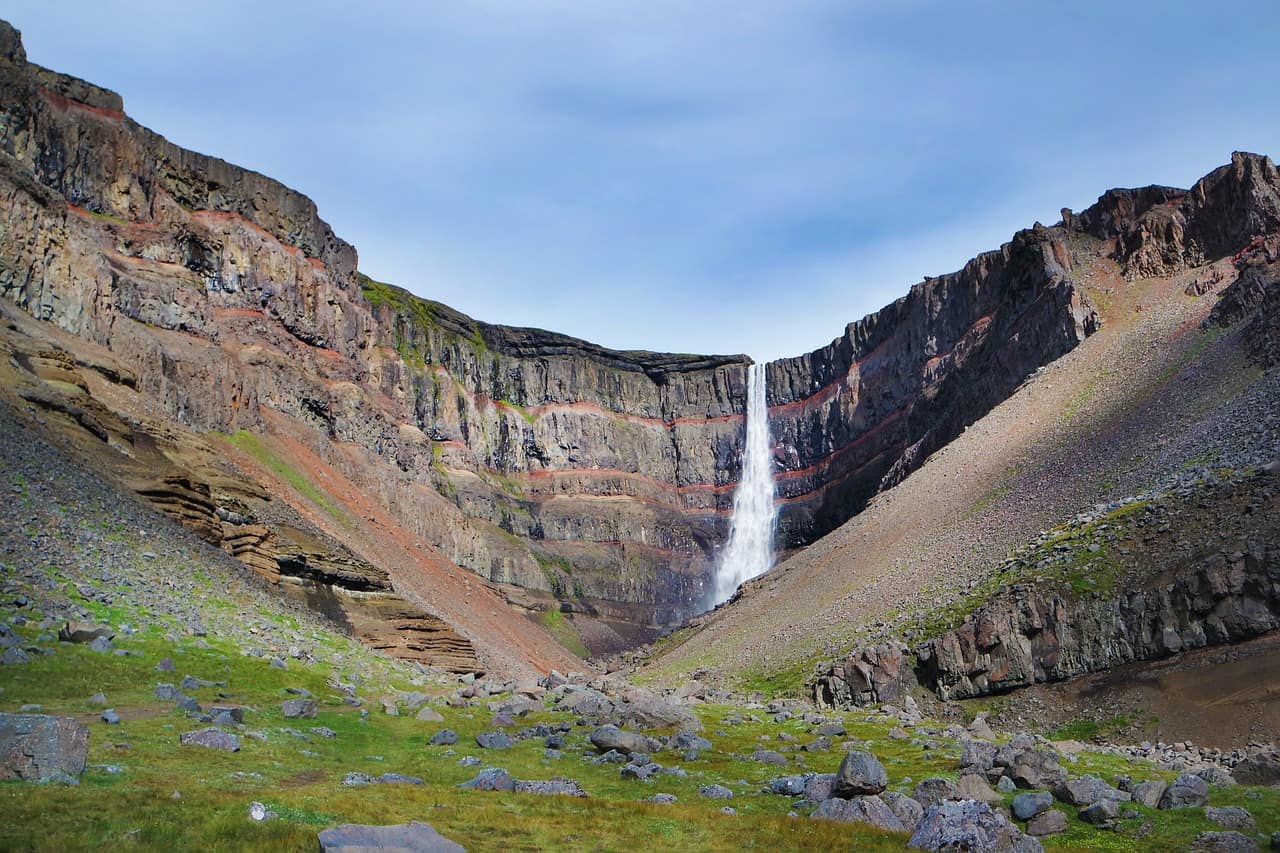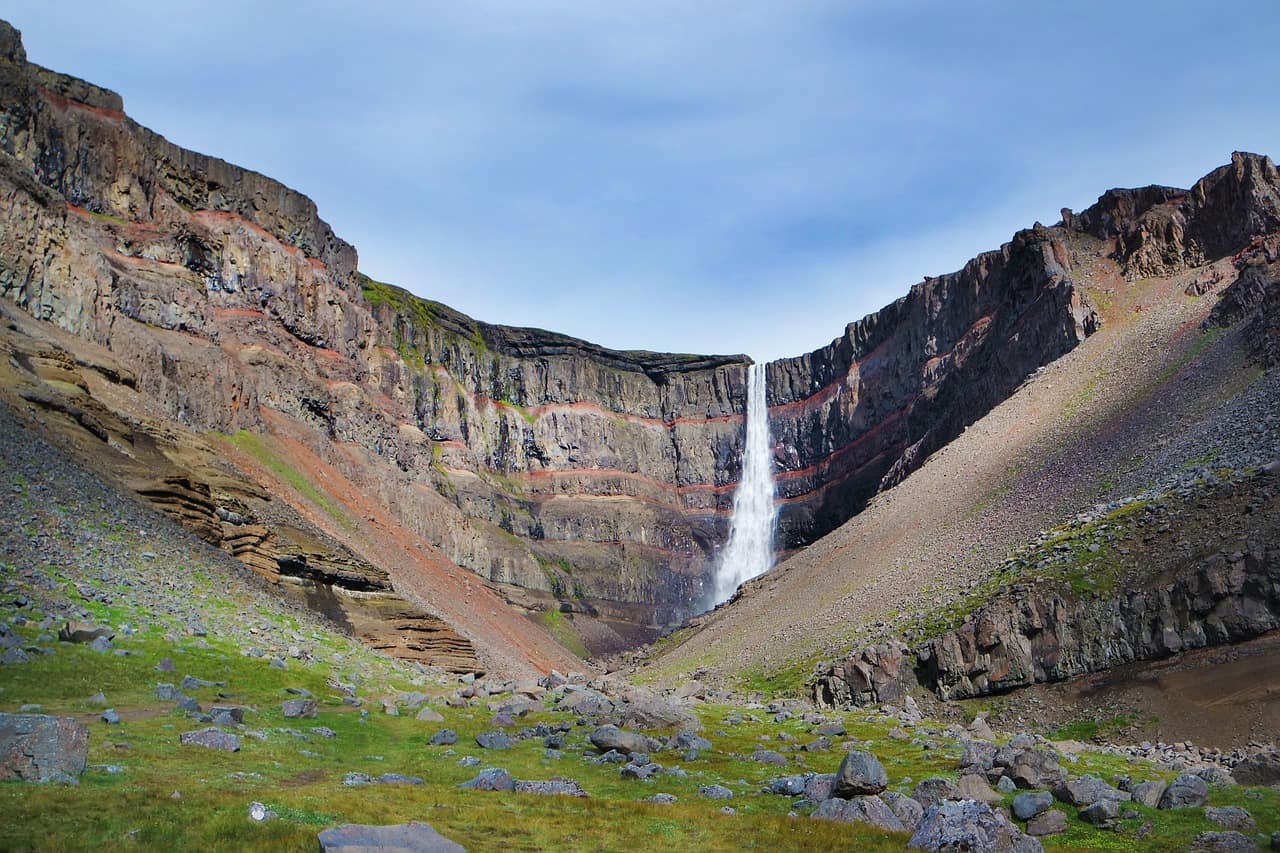

Seyðisfjörður announces itself with theatre: the road from Egilsstaðir climbs over the Fjarðarheiði pass, crests at 2,034 feet (620 meters) among snow patches that survive July, then descends a staircase of waterfalls (count the cascades of the Fjarðará; estimates exceed twenty) into a fjord head village of Norwegian timber houses arranged around a rainbow. Seven hundred people live here. The per capita charm may be the highest in Iceland.
The Famous Five Minutes and the Real Town
The Rainbow Street and Blue Church. Regnbogagatan, the lane painted in pride colors leading to the powder blue Seyðisfjarðarkirkja, is the east’s most photographed scene and earns it: the composition of street, church, and mountain wall behind is simply perfect. The town repaints the rainbow communally each summer, which tells you what it means here.
The Timber Town. The surrounding streets hold Iceland’s finest collection of early 1900s Norwegian kit houses, shipped flat packed during the herring boom: wander past Skaftfell (the east’s center for visual art, with its bistro), the old telegraph station that once connected Iceland to the world (now the Technical Museum), and houses wearing their century with paint and pride.
The Art Life. For its size, Seyðisfjörður’s creative gravity is absurd: the Skaftfell gallery and residencies, sound sculptures on the hillsides (Tvísöngur, the concrete domes you sing into, a 20 minute walk above town, rewards the climb), the LungA art festival each July that doubles the population, and a community of artists who chose the fjord on purpose.
On the Water and the Walls
Kayaking the fjord. The protected fjord head offers Iceland’s most scenic easy paddling: guided trips glide past waterfalls, the wreck of the El Grillo (the British WWII oil ship bombed here in 1944, now a dive site), and seals patrolling the shallows.
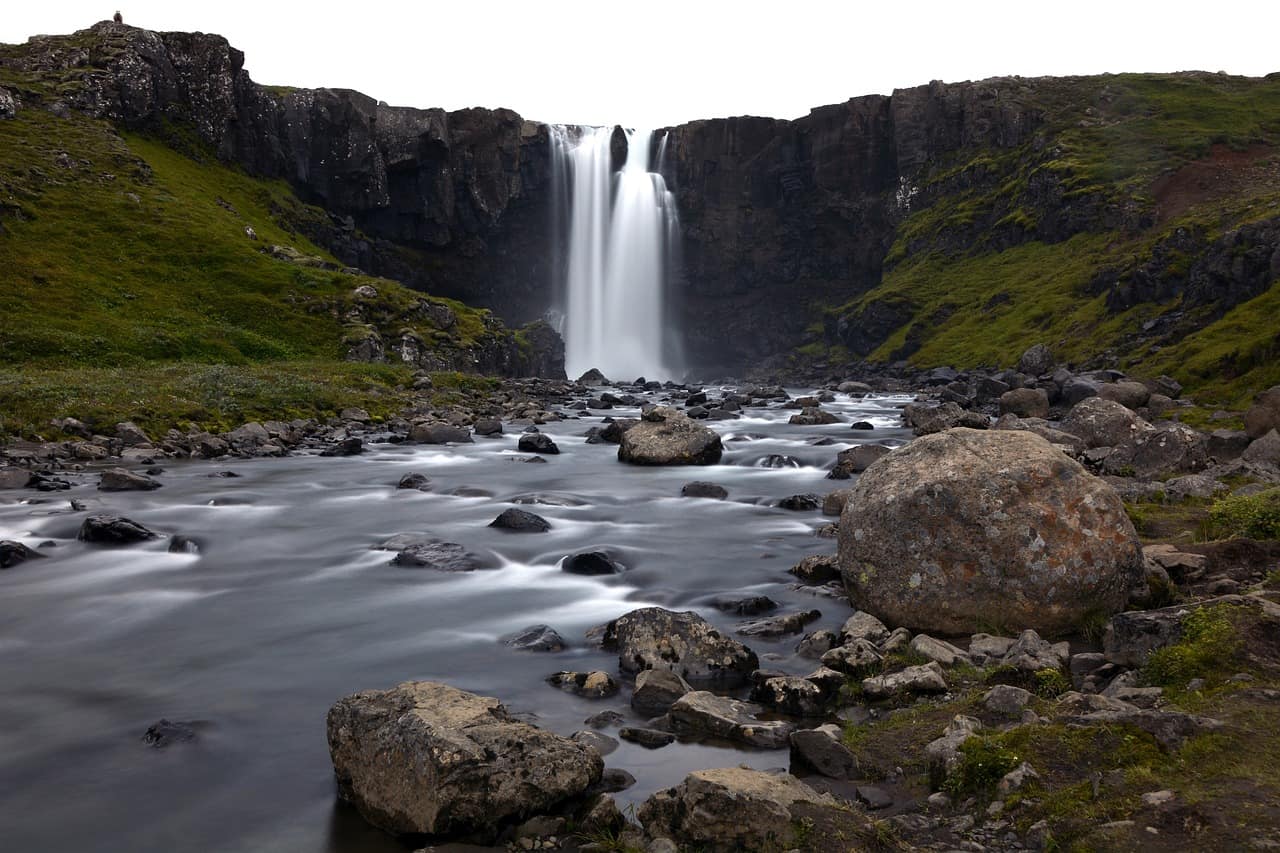
The Waterfall Walks. The Fjarðará’s cascade staircase has trails along it (Gufufoss, the largest, sits beside the main road), and the Vestdalur valley walk climbs past Vestdalsfoss toward a highland lake, one of the east’s loveliest half days.
Mount Strandartindur and the Avalanche Story. The peaks framing the town carry beauty and history: the 2020 mudslides reshaped part of the waterfront, and the town’s recovery, including relocated historic houses, is part of any honest visit.
The Ferry Dimension. The Smyril Line’s Norröna sails weekly to the Faroe Islands and Denmark, making Seyðisfjörður Iceland’s only scheduled sea link to Europe: on arrival mornings the village briefly becomes an international port, and watching the ship thread the 11 miles (17 kilometer) fjord is an event locals still note.
Practicalities
Seyðisfjörður is 25 minutes from Egilsstaðir over the pass (check road.is in winter; the heiði closes in storms and a tunnel remains the east’s eternal political topic). Summer brings the festivals, kayaks, and full services; winter brings profound quiet, northern lights in the fjord’s dark, and the reason houses here have always faced inward toward each other. Tálknfirðingar would dispute it, but the east’s best overnight is this one.
Frequently Asked Questions
Is Seydisfjordur worth visiting?
It is the single most charming village in east Iceland and many travelers’ favorite in the country. One night minimum.
How do you get to Seydisfjordur?
Over the Fjarðarheiði pass from Egilsstaðir (25 minutes), or by the weekly Smyril Line ferry from Europe.
What is the rainbow street?
Regnbogagatan, the painted lane leading to the blue church: repainted by the community each year and photographed by everyone who passes.