
Egilsstaðir is the east’s everything town: the airport, the supermarkets, the Ring Road junction, and the bed most Eastfjords plans are built around. It is young by Icelandic standards (founded 1947, population around 2,500) and short on old world charm, but it compensates with position: a lake with a monster, a striped waterfall, the country’s largest forest, and floating geothermal baths all sit within half an hour, and every eastern adventure routes through its roundabouts.
The Lake and Its Resident
Lagarfljót stretches 16 miles (25 kilometers) past town, glacially milky and 367 feet (112 meters) deep, and has hosted Iceland’s most durable cryptid since 1345: the Lagarfljótsormur, a serpentine worm whose sightings have been recorded for nearly seven centuries (a 2012 video reignited the debate, and a local commission solemnly reviewed the evidence). Monster or current pattern, the lake drive is the east’s loveliest circuit, and locals report sightings with a perfectly calibrated half smile.
Hallormsstaðaskógur, along the eastern shore, is Iceland’s largest forest: 740 hectares of birch and imported species, with marked trails, the Atlavík cove campsite of Icelandic summer legend, and the national amusement of a country where “the forest” is a specific place you visit.
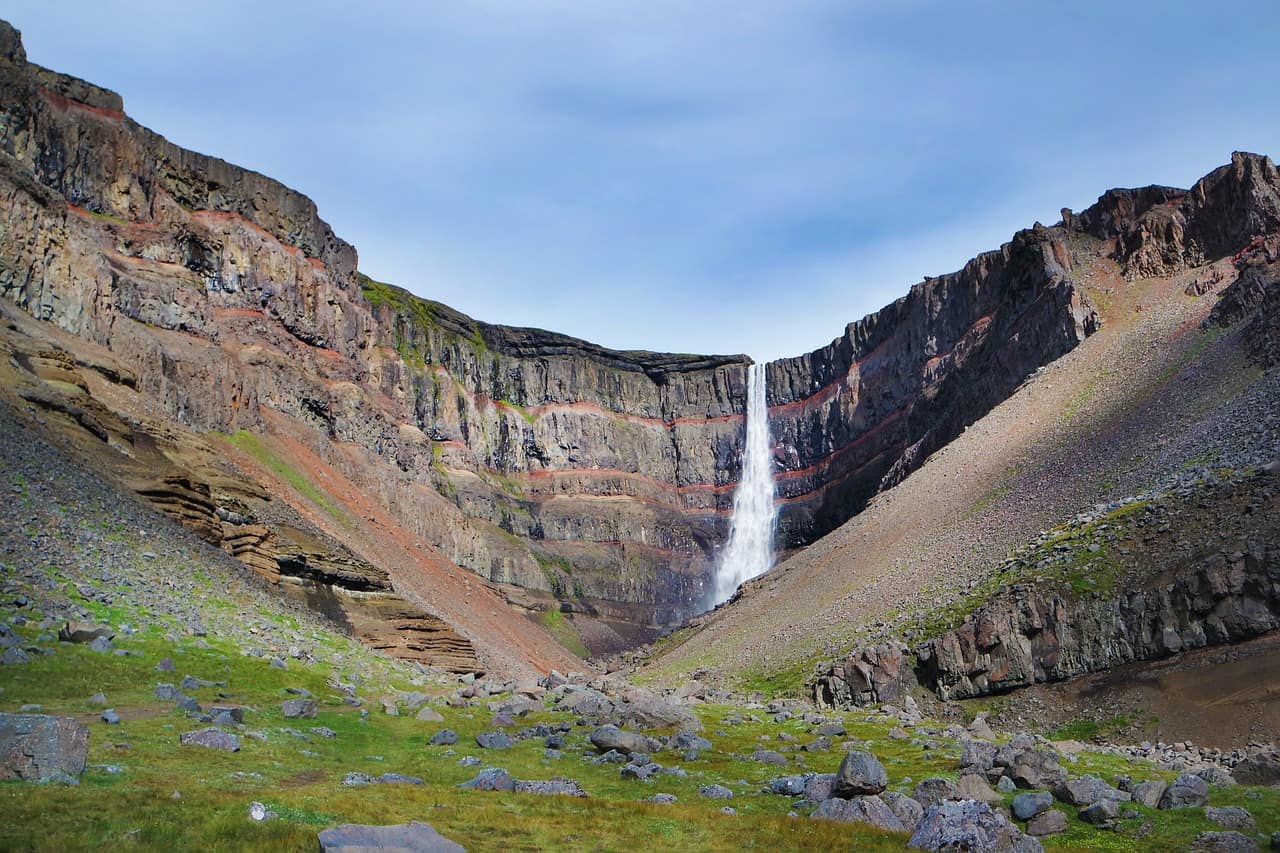
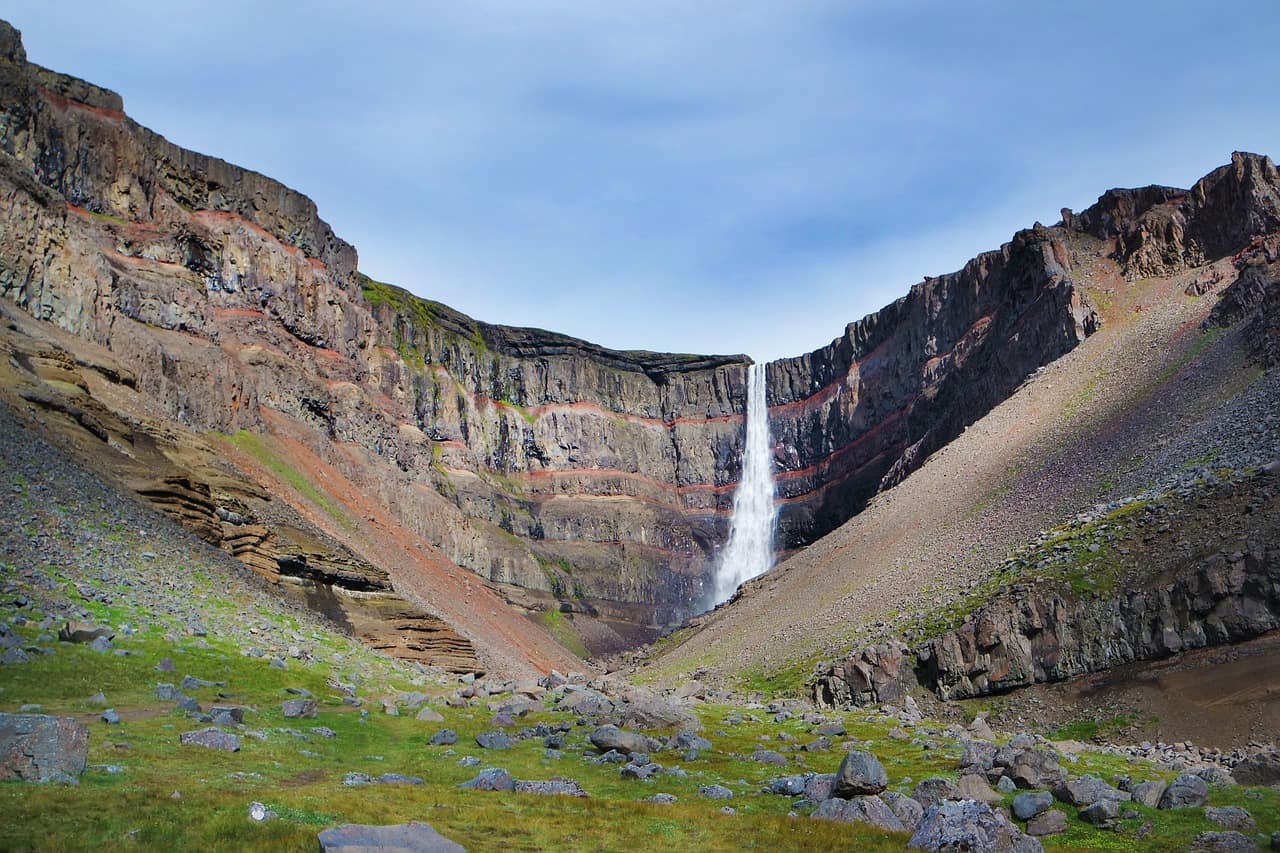
Hengifoss and Litlanesfoss. Across the lake, the east’s signature hike climbs past Litlanesfoss’s giant basalt colonnade to Hengifoss, 420 feet (128 meters) of fall striped with red clay bands between black basalt layers: geology’s own layer cake. Two to two and a half hours return, and the east’s single best short walk.
The Soak and the Table
Vök Baths. Egilsstaðir’s geothermal answer floats on Lake Urriðavatn ten minutes north: pools built out into the lake itself (the name comes from the ice free patches the hot springs kept open, which first revealed them), a swim up tea bar serving infusions of local herbs, and cold plunges into the lake for the brave. It completed the eastern circuit’s missing piece on arrival in 2019.
The food stop reputation. For a functional town, Egilsstaðir eats well: reindeer burgers and local lamb at the grills, Klausturkaffi’s legendary cake buffet at Skriðuklaustur (the monastery excavation and author Gunnar Gunnarsson’s striking house, 30 minutes down the lake), and skyr from the district’s farms.
The Hub Function
Everything east radiates from here: Seyðisfjörður’s rainbow village 25 minutes over the pass (our dedicated guide covers it), Borgarfjörður eystri’s puffins 70 minutes north, Stuðlagil canyon’s basalt columns 50 minutes west, the fjord road south toward Djúpivogur, and the wild reindeer herds that descend to the district’s edges in winter, Iceland’s only such animals. The airport’s daily Reykjavík flights make the east a viable trip of its own, skipping the long drive entirely: fly in, base here, and work outward.
Frequently Asked Questions
What is Egilsstadir known for?
The Lagarfljót lake and its legendary worm, the Hengifoss hike, Vök Baths, and its role as the east’s transport and service hub.
Is Egilsstadir worth staying in?
As a base, absolutely: two or three nights here unlock Seyðisfjörður, the puffins, Stuðlagil, and the lake circuit without repacking.
Can you fly to Egilsstadir?
Yes: daily one hour flights from Reykjavík make the east accessible without the Ring Road commitment.